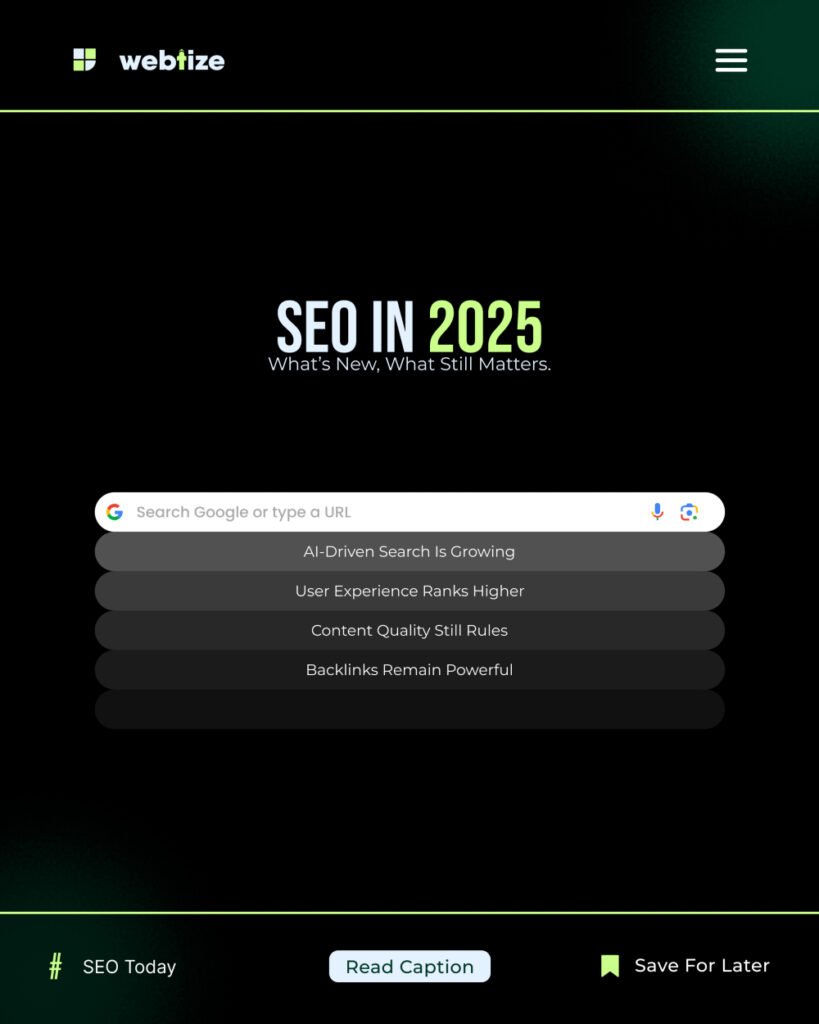
Competitors are already adjusting their plans. SEO for 2025 is not a new sport. It is the same game with sharper rules. Search is increasingly AI assisted, but people still want useful answers, fast pages, and trustworthy brands. If your site delivers that experience, you keep rankings and win clicks even as algorithms evolve.
Search engines continue to reward clear information architecture, crawlable pages, and content that solves real problems. At the same time, AI summaries and evolving results pages mean fewer default clicks for generic queries. Therefore your strategy must shift toward depth, differentiation, and signals that show real expertise.
How modern ranking signals work together
Content quality, technical foundations, and authority move results when they reinforce each other. Helpful pages reduce pogo sticking. Strong internal linking improves discovery and context. Clean code and fast rendering improve visit quality. Meanwhile, relevant mentions and links from reputable sites act as trust accelerants. When each pillar supports the others, compounding gains appear.
People first content remains central. It answers specific intents, uses plain language, and shows evidence. Show your methods, cite credible sources, and include examples or data. Add author bios and clear contact details to boost confidence. These simple additions help both users and crawlers understand why your page deserves to rank.
Signals that matter in 2025
- Information that satisfies intent on the first read
- Clear page structure with descriptive headings and scannable sections
- Smart internal linking that connects related topics and funnels to actions
- Technical health including crawlability, index hygiene, and performance
- Reputation signals such as press mentions, citations, and editorial backlinks
How to build an SEO for 2025 roadmap
Start with intent mapping. List the problems your audience searches for and group them by stages of awareness. Create one comprehensive hub for each topic and connect it to focused subpages. This structure helps search engines understand topical depth and helps users move from learning to action.
Next, align content with real expertise. Publish practical walkthroughs, decision guides, and original insights. Use checklists and short summaries to earn saves and shares. Add FAQs that mirror the exact questions people ask during sales calls or support tickets. These pieces are more defensible than generic listicles.
Technical foundations to refresh
Run a crawl to find duplicate titles, orphan pages, and redirect chains. Fix index bloat by removing thin or outdated pages that cannot be improved. Add structured data where it clarifies content types such as articles, products, FAQs, and how-tos. Improve Core Web Vitals by reducing unused scripts, compressing images, and preloading critical resources. These changes raise visit quality and reduce wasted crawl budget.
Content patterns that win in 2025
- Teaching pages that show steps, tools, and pitfalls
- Comparisons that explain tradeoffs with evidence
- Use cases that connect features to outcomes
- Research roundups that cite sources and add commentary
- Case studies with numbers, timelines, and lessons learned
Authority building without shortcuts
Backlinks still matter. However, quality outweighs volume. Target links and mentions that make sense to a human editor. Pitch industry publications with data, examples, or contrarian insights. Partner with relevant communities and contribute guides that fill real gaps. Build assets worth referencing, then promote them with a short, direct outreach note. When a link also sends qualified traffic, you are on the right path.
Reputation grows on and off your site. Keep your About page current. Publish clear editorial standards. Showcase awards, certifications, and speaking engagements. Encourage satisfied customers to leave reviews on credible platforms. These signals help users decide and help algorithms recognize value.
Measuring progress the right way
Track a mix of leading and lagging indicators. Leading indicators include impressions for target topics, average position for definitional queries, and scroll depth on key pages. Lagging indicators include organic demos, trials, form fills, and revenue. Build a simple dashboard that shows these metrics by topic cluster. When a cluster improves in position and engagement together, your plan is working.
To isolate wins in an AI-assisted results world, measure brand queries as well. If branded search volume grows, your authority work and content distribution are raising awareness.
Resources to validate your work
For technical guidance, review Google Search Central on people-first content and performance best practices. These pages help you set baselines and avoid myths.
- Creating helpful, reliable content: https://developers.google.com/search/docs/fundamentals/creating-helpful-content
- Page experience and performance: https://developers.google.com/search/docs/appearance/page-experience
For link evaluation and competitive research, read neutral analyses from Nielsen Norman Group and reputable SEO research tools. Use them to benchmark without copying tactics blindly.
- NNGroup on credibility and UX: https://www.nngroup.com/topics/credibility/
Work with Webtize
If you need a plan that your team can execute, Webtize can help. We map topics, build a content system, and fix the technical gaps that block growth. Explore services at https://webtize.co/ and contact the team at https://webtize.co/contact/. Together we will ship a practical roadmap for SEO for 2025 that compounds month after month.